Homepage
FabLab Leuven is "open source hardware" for students and staff of the KU Leuven Association and Imec, in other words: a library of user-friendly machines to make almost anything in wood and plastic.
For students and staff members of the KU Leuven Association and Imec.
attention: RESERVATION POSSIBILITY for personnel: make your reservation here.
Always bring your personal student or staff card from the KU Leuven Association and Imec with you and register with us before using the machines. We allow maximum 25 persons in our large FabLab room.
When you are personnel, you can still make a reservation here.
Furthermore you show that you respect our FabLab and the other users by always cleaning up your material when you have finished.
You are only allowed to use one machine per project / person (i.e. if you are making invitiations or tokens for scouts, you can only use one laser cutter). This in respect for the people waiting to use the laser cutter as well.
Monday (Leuven Annual Fair) Closed Tuesday 8:45 - 17:45 Wednesday 8:45 - 17:45 Thursday 8:45 - 17:45 Friday 8:45 - 17:45 Saturday Closed Sunday Closed
We zijn gesloten. Opnieuw open op Monday om 8:45u
Next data we're closed or have different opening hours:
2 Nov - 2 Nov Closed 11 Nov - 11 Nov Closed 25 Dec - 1 Jan Closed
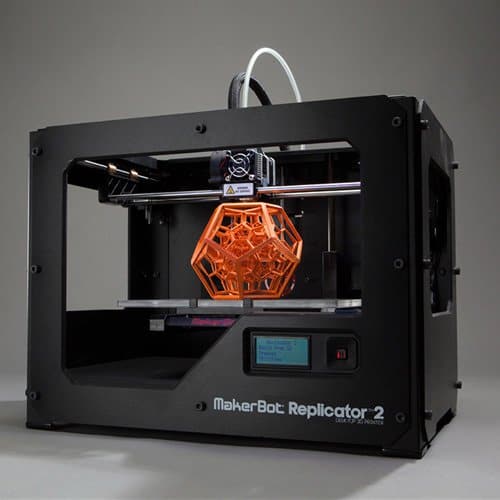
Heb je een idee? Wil je het realiseren? Zoek je een plaats waar je een eerste prototype kan maken om eventuele klanten te overtuigen? FabLab-Leuven is die plaats...
News
Kamiel developed wireless robotic flowers: “The idea is that other researchers can easily replicate them, so everyone can build on each other’s work.”
Kamiel Debeuckelaere (32) won the Flemish Thesis Prize in 2021 for his master’s thesis in which he developed wireless robotic flowers to support his supervisor’s research. He now uses those flowers himself as an FWO PhD student in the Ecology, Evolution and Biodiversity Conservation department at KU Leuven, where he conducts fundamental research on bumblebees.
What originally brought you to FabLab Leuven?
Kamiel:My master’s thesis. That was five years ago. At the time, I ended up working with Maribel Pozo, a Spanish postdoc, now a professor, who conducts research on bumblebees and pollination. Her work focuses primarily on the properties of nectar and how they affect pollinators. This kind of research often involves observing bumblebees on flowers and recording observations, or making videos that you can review later. Maribel was looking for a way to automate that process. She turned it into a master’s thesis in the hope that a student would take it on. That student turned out to be me. The thesis description sounded fun, although I hadn’t really considered how technical it would be. I think she deliberately left that out. Otherwise, she might not have found a biology student crazy enough to take it on. For my thesis, I first sought help from the ICTS department at KU Leuven. There, together with Dirk Janssens, I figured out the electronics for the robot flower. For the assembly and the casing, he advised me to check out FabLab. I really wanted to 3D print, but I’d never done it before.
What exactly was the robot flower project?
Kamiel: Some simpler robotic flowers already existed. We wanted to make them a bit more complex so they could automatically detect whether a bumblebee was inside the flower and how long it stayed there. With the current version, we can even identify which specific bumblebee it is based on a tag on its thorax. We also wanted the robotic flowers to automatically dispense nectar. Natural flowers contain very little nectar, only a few microliters. Artificial systems often have a large reservoir, which discourages bumblebees or other visitors from moving between different flowers. So we needed a system that automatically replenishes the nectar in very small amounts. We also found it important to have a wireless system so the flowers could easily be placed anywhere, such as in a greenhouse for experiments. Power-wise, that’s simple, you just need to insert a battery. The main challenge was data transmission. We wanted to be able to view the data in real time during the experiments. To do this, we placed a small antenna in the flowers that works with Internet of Things (IoT). It uses very little energy because it operates via radio signals and does not use Wi-Fi. The data is sent to an antenna in small data packets every ten minutes. The university has several antennas in Leuven that receive these packets and then transmit the data to your computer via the internet. This way, you can see what’s happening in real time, as well as whether there are any issues with, for example, the flower or the battery.
At FabLab, I assembled all the parts of the flower and was able to use a good soldering iron. I then made the flower casings using the 3D printer. During the year that I worked on my master’s thesis, I made twenty robotic flowers, so that was quite a bit of work.
What surprised you about your experience at FabLab?
Kamiel: I was most surprised by how friendly everyone was. I didn’t know anything when I first got there. I’d walked past FabLab many times before and thought it looked cool, but I always assumed it was for engineering students or architects who needed to make models. It never occurred to me that it was for everyone. My thesis gave me the push I needed to finally go inside. You can just walk in there and do your thing. The first time, I had arranged to meet up with Marc and Thomas. I’d never 3D printed before. They explained everything to me and helped me get started. I could ask them anything at any time.
Did FabLab change the way you think?
Kamiel: Yes, whereas we used to put together more makeshift setups, I now easily think: I can actually make it exactly the way I want, so that the setup looks nicer and is always consistent. When you put things together yourself, there’s always some variation. Now it looks more professional. Colleagues often think: Is that really necessary? Can’t we just recycle something and put it together ourselves? But then I think: if we can 3D-print it, why not? My PhD supervisor, Tom Wenseleers, also goes to FabLab now to make test setups. Recently he printed a piece of honeycomb there for an experiment with queen larvae.
Has FabLab made a difference in your work and the path you’ve taken?
Kamiel: Definitely. The robotic flowers I made at FabLab have brought me a lot, let’s put it that way. Not just in my master’s thesis, where I created the flowers, but also in my PhD, where I’m actually using them now. Without FabLab, I simply wouldn’t have done any of what I’ve done so far. 3D printing has even become one of my hobbies. I’ve now bought my own printer so I can experiment even more, but without FabLab, I would never have gotten into it.
What has FabLab brought you?
Kamiel: Without FabLab, I don’t think I would have won the Thesis Prize for my master’s thesis. Although I do put it into perspective. It’s just an award for the best thesis in Flanders, at least according to the jury and based on the theses that were submitted. But it’s still a nice recognition. I also wouldn’t be pursuing a PhD without FabLab. I received a personal PhD fellowship from the Flemish government. Being able to bring my 3D-printed robot flower was a nice bonus that helped convince the jury of my project. I’m pursuing my PhD through the FWO, with KU Leuven as my host institution.
How do you see the future of your wireless robotic flowers?
Kamiel: That’s a good question. I built them, but they belong to KU Leuven. So I have to leave them here after I finish my PhD. I can easily make new ones, of course, but officially they have to stay here. They might be used for a new project by someone else. People have asked me if I’d like to patent them, but they’re not thát special. I think an engineer could make them ten times better. It could all be made more compact, but I specifically designed it this way so people without experience could also replicate them themselves. That’s the concept. The idea is that other researchers can also easily use the robot flowers. That’s the best part about it. It’s also the philosophy of FabLab. Anyone can use it, and I’d be more than happy for them to do so. A while back, I saw a paper from the US that used my flower as inspiration and built a mechanical crab spider on it. That’s cool to see. I’ve also drawn inspiration from Finnish researchers myself. My robot flower is actually a new, wireless version of theirs. Everyone builds on each other’s work.
I’m using the robotic flowers to conduct fundamental research on bumblebees. It’s learning for the sake of learning, seeing how everything works. But later on, this could lead to practical applications or certain concepts, potentially on how to protect bumblebees. The jury for the Flemish Thesis Prize had the idea of turning it into a citizen science project. But that’s still a step further. It’s not as simple as they thought. For now, it’s not technically possible anyway, but I’m also not sure how informative it would be with the current version. It is, however, a further step that can be considered.
How do you see your own future?
Kamiel: I don’t know yet. That’s a tough question. I really enjoy research, but the academic world is tough, and I don’t know if there’s a place for me. It’s like a pyramid. With every step you take upward, there’s less room. On top of that, the government is constantly cutting funding for science, so there are fewer and fewer grants, and the competition is getting very intense. Above all, I want to find a job I enjoy, one where I can combine biological research with the fun little projects I’ve discovered through FabLab. I’d love to contribute ideas, help out, and build things for experiments. That doesn’t necessarily have to be within the academic world. Most of all, I want to be able to combine everything.
Do you have any advice for students who want to create something?
Kamiel: I’d say: just go for it. Everyone at FabLab is super friendly. I think they’re open to anything, or at least to a lot of things. So if you have a wild idea, go for it. You’ll learn as you go, at FabLab and with a few YouTube tutorials, you can get pretty far. And with AI, it’s only getting easier. Code that would otherwise have taken you a week to write now gets written for you in no time. Anything is possible. Once you get started, it also becomes easier and easier.

What does a makerspace actually do to the people who pass through it? We’re starting a series of interviews to find out. First up: two former student workers who met at FabLab Leuven and now run a business together. This is the first in a series of interviews with FabLab Leuven users. No PR, just an honest attempt to understand what a place like this does to people — in their own words. Next month: another conversation, another path.

Femke Maris (25) and Lowie Goossens (26) met each other in Fablab Leuven, where they worked as students for several years. They have since started a business together: Lofenix. In 2021, less than a year after founding their company, they won the Audience Award at the LE(J)ON Award for young entrepreneurs in Leuven under their former name STEM Support. Aside from that, Femke teaches STEM and math at a high school and Lowie works as an engineer in the steel industry.
What originally brought you to FabLab Leuven?
Femke: I attended one of the first summer camps myself. I studied STEM in school. Since we didn’t have the materials, we’d sometimes come to FabLab, which is how everyone got to know me again. I was then asked if I wanted to lead summer camps. I started working at FabLab as a volunteer and student worker when I was 16. When I continued my studies in Leuven, I also started working here throughout the year.
Lowie: I ended up at FabLab as a civil engineering undergraduate. I used to come here often for school projects, but also for other smaller projects. With the things available here, there were plenty of opportunities to work on cool projects. I came here because of my studies, but I actually spent more time at FabLab in my free time than I did to work on my school projects.
What were your first projects?
Femke: For me, it was the summer camps. I helped the kids make things like keychains, clocks, and their own 3D projects. Since I had attended the camp myself and visited FabLab with my school, I was already familiar with the materials. I also came by every so often for my own little projects.
Lowie: My first projects were P01 and P02, the project courses in the civil engineering program. We were assigned to straighten a steel tube using Lego and to build a machine that shoots ping-pong balls. The parts I designed for that, I laser-cut at FabLab.
What surprised you most about that experience?
Lowie: Basically anything was possible. That’s what surprised me the most. You had to come up with your own ideas, but then whatever you came up with could be printed or made, and they gave you advice. In that way, FabLab opened up a whole world of possibilities.
Femke: That’s true. Even now, when I run into a small problem in my daily life, I sometimes just send a message and then it turns out there’s a 3D print for it. So then you just have to print it and your problem is solved. A small example: I was bothered by the trash bag rolls in my cupboard. I’m someone who likes things to be organized. I can’t stand it when everything’s a mess. So I went looking and found a 3D design for holders in which you can place those rolls. I printed them, and now, when I open my cabinet, my three rolls of trash bags are neatly sitting there, instead of me having to search for them through the mess.
Lowie: We have a lot of those things. For example, we also have a special soap dish and an organically designed coaster for plants.
Did FabLab change the way you think?
Femke: It opens up new perspectives. By spending so much time at FabLab, you start looking at solutions differently. Even in everyday life. You begin to think outside the box. There has to be a solution, whether it’s with the laser cutter or with a 3D printer.
Lowie: Yes, it actually opened up “the box”. Whereas you’d normally get stuck in your ideas because something isn’t possible, FabLab is the opposite. You get there and you’re presented with possibilities. No one’s going to tell you you have to do it, but you get the chance to do it if you want to.
Femke: At FabLab, the motto is: Try it. If it doesn’t work, try again. That means you never have to be afraid to come up with an idea. You can always try.Sometimes it really doesn’t work and you hit a wall. Or it works, but just needs a few tweaks. The great thing about FabLab is: it’s like getting a big box of Legos, toys you can use to combine different things into a big, new thing.
Has FabLab made a difference in your professional life and the path you’ve taken?
Lowie: Yes, I graduated with a civil engineering degree in computer science. The typical career path for someone with that background is to work for large software companies or organizations that focus purely on software. Not me, I went in a more practical direction and ended up in the heavy metal industry. The experience at FabLab comes in handy there, especially the project-based thinking and the method of approach. The experience with identifying problems is also super important to me. Finding the root cause of a problem and looking at it broadly to come to a suitable solution.
Femke: FabLab empowers you to actually do things. I’m a math teacher, but I don’t just teach math. I also share 3D drawing insights and encourage them to think out-of-the-box. I often develop new materials for my lessons. When I teach solid geometry, for example, I bring a 3D-printed or laser-cut model that I made myself. That way, my students see that you can really just do it yourself. I also try to share with them what FabLab has taught me: that it’s okay to make mistakes. You can only learn from them. Sometimes you even have to dare to make mistakes to know what can be improved. I also teach them not to give up so easily. I notice that a lot with young people. If something doesn’t work out, they think, ‘Who cares, the teacher will figure it out.’ That’s not how it works. With the Fablab-mindset I encourage them to keep trying. That’s the only way to get the farthest in life. I really try to instill that in them.
You two have also started a business together: Lofenix. How did that come about?
Femke: When we were both still studying, we founded STEM Support. There’s no manual for teaching STEM in schools, and many teachers have questions. That’s why we started selling various STEM projects, some of which we refined or helped design during the FabLab summer camps. At some point, we also started making vertical farms (climate chambers) at FabLab. That was by far our biggest project ever.
Lowie: Those climate chambers started out as small cabinets with a few LED strips and sensors inside. We made three models out of wood and then switched to metal. A professor of bioengineering asked us if we could make larger ones. We built six giant chambers for him, which I believe are now being used quite intensively for research.
Femke: We realized that it was becoming too much to just sell STEM projects, so we changed our name. With Lofenix, we still sell STEM projects, but we also take on engineering projects. Those vertical farms are one example, but we’ve also designed sensors that are now installed in Kouterbos (a forest) in Oud-Heverlee. They measure air pressure, humidity, and temperature so you can digitally determine the optimal walking route. We develop solutions based on requests or on someone’s interest and may or may not incorporate an educational component. We’re now also going to offer study guidance through Lofenix. We also continue to support schools where needed. For example, if schools don’t have a 3D printer but still want to print something, they can do so through us. We also offer workshops. In practice, these mainly attract teachers, but we’re noticing that it’s also becoming a team-building trend. Going laser cutting, soldering, or 3D printing together turns out to be a nice change from going bowling or golfing.
Lowie: FabLab made our business possible. Without it, we simply wouldn’t have been able to do it. At least not in this sector.
Femke: FabLab still plays a support role today, for example when we need advice. And the fact that we’re allowed to use the laser cutters from time to time ensures that we can always help everyone.
Where does your passion for STEM come from?
Lowie: Ever since I was a kid, I’ve wanted to build and create things. I was very STEM-oriented, so that just never really changed. In high school, it was harder to keep doing those things because places like FabLab aren’t everywhere, especially not in smaller towns. But in university, you get the chance to go to FabLab, and that’s how it grew again.
Femke: I’m naturally creative. I used to do a lot of crafts, drawing, and coloring. In high school, I chose to really challenge myself by studying STEM, to develop and build things. That’s when I really got involved with FabLab, but I was already really fascinated by that summer camp I did. The spark was always there for me. It never went away. Otherwise, I wouldn’t be here anymore.
As student workers, you both led camps (for kids between 12 and 16). What was that like?
Femke: Since the camps last a week, we have a week to help and guide those kids. If something doesn’t work out, kids easily get stuck in a negative spiral. But when they do succeed, they have a sense of accomplishment. We make sure to highlight those moments. Those little successes encourage the kids to keep trying and to keep going just a little bit further. By the end of the camp week, they’re usually independent, and we’re sometimes left twiddling our thumbs.
Lowie: That’s especially true of the last two days of camp. That’s when they’re given a bit more freedom. We give them lots of examples of what they can make, but they often develop their own ideas. Every year, there are some amazing things they create.
Femke: Everyone is creative in their own way. I love being a part of that.
Is everyone capable of creating a finished product at FabLab?
Femke: I think so.
Lowie: They do have to be interested in it, though.
Femke: Yes, but in principle, anyone can get there. Even if it’s just a small problem for which they come up with a solution. I’m convinced that everyone is creative. Interest obviously plays a role, but sometimes you can also push that a little. Especially in education. At that age, their brains aren’t fully developed yet, you can still shape them. Sometimes kids just need a little nudge.
What’s the reason you’ve kept coming back to FabLab yourselves?
Femke: The atmosphere. The laughter and having fun together. That has really grown over the years. As a student worker in summer, you already notice that this is such a close-knit group and that you’re allowed to be part of it. They don’t exclude you. They embrace you, guide you, and brainstorm with you. That makes you want to come back. The people here are great. And it’s never with a long face. If you’re facing a problem or feel stuck, there are always people who’ll help you figure it out. They help you regain a broader perspective. Everyone’s thought process is different, so everyone comes up with different solutions. You can build on each other’s ideas and refine them. That’s why you enjoy coming back here and want to try new things.
Lowie: There are always new, innovative things going on here. If it’s not the gadgets, it’s the ideas. There’s always something cool being conceived here. You hardly find that anywhere else. The importance of the people at FabLab cannot be underestimated. It’s just super fun to be around like-minded people. That connection is priceless. You share lots of fun moments, but also inspiration, and through those connections, you sometimes end up on new projects.

When in 2014 two enterprising students, Dimi Moreels and Kristof van Thielen, had to initiate their graduation project, they soon found their way to the FabLab. The idea was to develop an ecological, trendy wallet, in line with their vision that nature and stylish fashion can go hand in hand. Getting rid of the perception that sustainable products are merely boring, but developing a concept that shows that eco-friendly products can also be trendy.
With the assistance of FabLab Leuven, the Pallet was created: a compact, trendy wallet made of bamboo, which can be personalized by engraving texts, logo’s, etc. Together with the Pallet the company SMTH Smooth (pronounced as Something Smooth) was born! Beginning 2014 founded as a Small Business Project, but after winning two awards (Hyundai Brilliant Young Entrepreneur award and Start-it @ KBC), the project made a start as a commercial business.
FabLab’s role in this project was much bigger than merely providing the machines and guiding young entrepreneurs on the technical side. Also, for the creative part the employees of FabLab were there for advice. And even while developing their business plan Dimi and Kristof were assisted by them. After the Pallet also the wooden smartphone cases, a clothing line of their own, wooden sunglasses and watches were added to the product line.
It’s clear that Dimi and Kristof owe FabLab a lot. More than that, their collaboration with Tomorrowland could be achieved partly thanks to the flexibility of FabLab Leuven: two of the lab’s laser cutters have been placed at the disposal of SMTH Smooth during the festival so they could engrave smartphone cases with a design developed by Tomorrowland. In terms of support to a start-up this may count.
Still now Dimi and Kristof make use of the services FabLab offers: at least once a week the laser cutters are being used at a fair hourly price. A big advantage for young entrepreneurs as purchasing the necessary machines by themselves would be a huge investment.
Behind the scenes FabLab Leuven continues giving them advice on further development of their business: ‘It provides us ease of mind’, says Kristof, that FabLab keeps guiding us during this adventure.’
SMTH Smooth was one of the first start-ups that was guided in such a way, and if it depends on FabLab, Smooth will not be the last one either. The intention is that more and more young entrepreneurs find their way with their ideas to FabLab, so that a nice partnership can be formed.
So, to all starting and aspiring student-entrepreneurs who read this, you know where to go 😉 .

With the support of: